Packing for the Camino can feel more intimidating than the walk itself, but it does not have to be. With a simple system, a realistic weight target, and a clear checklist, you can show up feeling prepared instead of overloaded.
Packing
Tip: If you want a ready‑to‑use, printable checklist plus a weight‑tracking spreadsheet, you can grab the Camino Packing List from my Gumroad shop here: Download the Camino Packing List on Gumroad.
How light should your pack be?
A good rule of thumb for most pilgrims is to keep your backpack at or under about 10% of your body weight (before food and water).
- For a 60 kg person, that means aiming for a pack in the 5–6 kg range.
- For a 75 kg person, think 7–7.5 kg as a sensible ceiling.
You will pass through towns with pharmacies, supermarkets, and gear shops almost every day, so there is no need to pack for every possible scenario “just in case”.
Reminder: The Gumroad packing list includes a weight‑by‑item template so you can see exactly where those kilos are going: Get the Camino Packing List.

Core gear: backpack, footwear, sleep system
These are the three items where comfort really matters, and they are worth prioritising in your budget.
Backpack
- Size: 30–40 litres is enough for most non‑camping pilgrims.
- Features to look for: a proper hip belt, breathable back panel, and simple pockets rather than dozens of compartments.
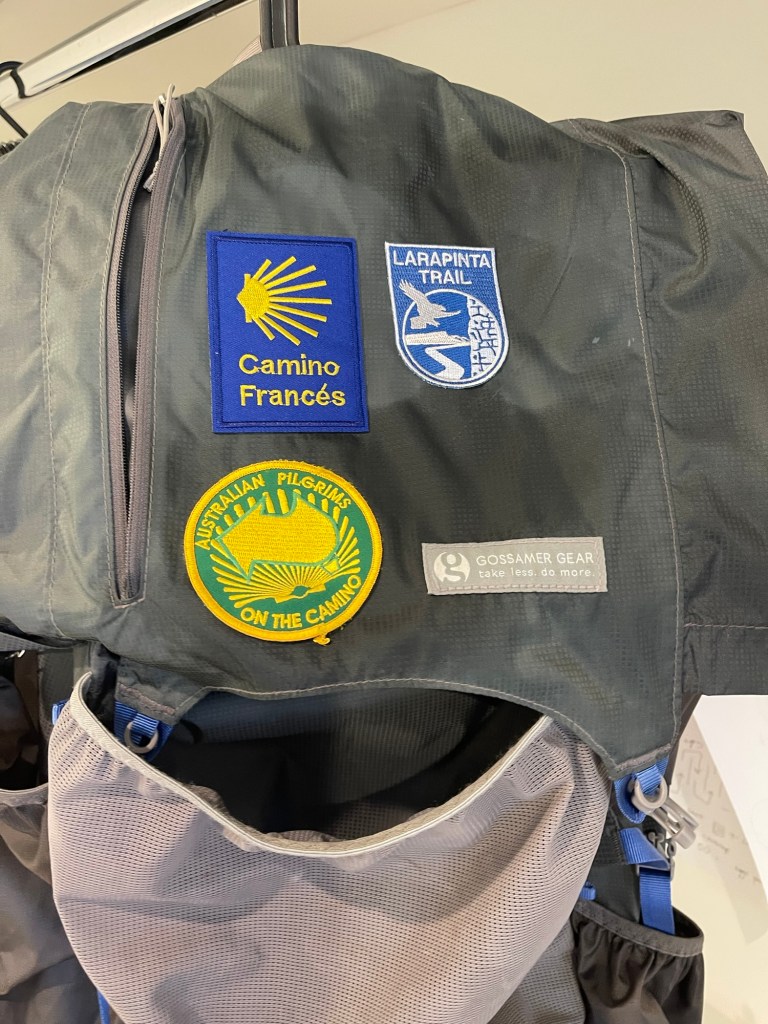
- I use a Gossamer Gear Mariposa 60L which has 36L internal space and 24L of stuff areas around the outside.
Footwear
- Most modern pilgrims walk in trail runners or light hiking shoes, not heavy boots.
- Whatever you pick, make sure they are already broken in on real walks with a loaded pack.
- I have personally used Altra Lone Peaks, Merrell Moabs, Merrel Agility Peaks, HOKA Speed Goats and ASICS, all worked well for different things. I made a shoes guide which is also available for Download.
Sleep system
- On most Camino routes you only need a light sleeping bag or liner, depending on season and whether albergues provide blankets.
- I use a small puffer blanket (500grm) and a sleeping bag liner (180grm)
- Add a small inflatable pillow if you know your neck is fussy. I used my puffer jacket wrapped into itself.
The downloadable checklist is organised by category (pack, footwear, sleep, clothing, etc.) so you can tick off each section and see your running weight total as you go. I’ve also included some examples of specific gear you might like to look at.

Clothing: the “2–3 of everything” rule
Clothing is where most overpacking happens, especially for first‑timers. The Camino rhythm is simple: walk, shower, do a quick sink‑wash, and wear things again once they are dry.
A practical capsule wardrobe for spring–autumn might look like this:
- 2–3 technical t‑shirts or light hiking tops
- 1 long‑sleeved layer (merino or synthetic)
- 1 light fleece or warm layer
- 1–2 pairs of quick‑dry shorts or trousers (zip‑offs are popular)
- 3 pairs of walking socks (merino or synthetic, not cotton)
- 2–3 pairs of underwear
- 1 sleep/relax set (light shorts/leggings and t‑shirt)
- 1 compact rain jacket or poncho
- Hat or cap, and a buff or light scarf for sun and wind
Choosing quick‑dry fabrics lets you hand‑wash in the evening and have everything ready again in the morning, which means you carry less overall.
When it gets cold you will very likely wear every stitch of clothing you own – think about your layers in the event of snow (depending on time of year).

Toiletries and first aid: keep it tiny
Think “travel size plus a pharmacy every day or two”, not “expedition into the wilderness”.
Toiletries basics:
- Travel‑size toothpaste, toothbrush, tiny soap/bodywash, deodorant
- Small quick‑dry towel
- Razor (if you use one), nail clippers, tweezers
- Minimal makeup and skincare, if you bring any
First‑aid / foot‑care basics:
- Blister plasters or tape
- A few painkillers and any personal medications
- Tiny tube of antiseptic cream
- A couple of safety pins and a bit of duct tape (wrapped around a pencil, not a whole roll)
Most of these items are easy to replace or top up anywhere along popular routes such as the Francés or Portugués.
Tech and “nice‑to‑have” extras
These are the items that can quietly add a kilo or two if you are not careful.
Common tech items:
- Smartphone, charger, and small power bank
- Universal plug adapter
- Optional: lightweight headphones or earbuds
Nice‑to‑have extras (choose carefully):
- Lightweight e‑reader or tiny book
- Small journal and pen
- Compact camera (only if you really value it more than the extra weight)
Try to limit yourself to one “luxury” category: either a book, or a journal, or a dedicated camera—most pilgrims find a phone handles photos well enough.

Seasonal tweaks: summer vs shoulder vs cooler months
Your core list stays almost the same, but the layers change with the season.
Summer (June–August):
- Prioritise sun protection: hat, sunglasses, high‑SPF sunscreen.
- Very light sleep system (often just a liner).
- Extra emphasis on breathable fabrics and ventilation.
Spring and autumn:
- Add a slightly warmer mid‑layer and possibly lightweight gloves.
- More reliable rain protection (jacket or poncho plus pack cover).
Cooler shoulder or winter conditions:
- Thermal base layer top and bottom.
- Warmer sleeping bag or liner combination.
- Be prepared for some sections where snow or very wet weather is possible.
Budget vs premium gear: where to spend and where to save
You do not need top‑end gear to walk the Camino, but some items are worth a bit more investment than others.
Worth spending more on:
- Backpack that fits you properly and is comfortable under load
- Footwear that suits your feet and terrain
- Good socks that help with blister prevention
Where you can save:
- Clothing (as long as it is quick‑dry and comfortable)
- Accessories like hats, buffs, and basic toiletries
- Many items can be bought cheaply in Spain or Portugal if needed
A smart approach is to buy mid‑range gear for most categories and only go premium where comfort or fit is critical for your body.
Your printable Camino packing checklist
To make this genuinely plug‑and‑play for your Camino planning, use a checklist where you can:
- Tick off each item by category
- Track the weight of every item and see your running total
- Remove anything that is not essential for your season and route
That is exactly what the Camino Packing List on Gumroad is designed to do:
- Printable PDF checklist (by category)
- Space to add your own personal extras and see the weight impact instantly
- Examples of specific gear you can use to start your research (but it isn’t exhaustive)
You can download it here: Camino Packing Guide
Pack light, test everything on a few training walks at home, and your backpack will fade into the background so you can focus on the views, the people, and your own inner journey instead of your shoulders.
 The Prepared Pilgrim
Leave a comment