
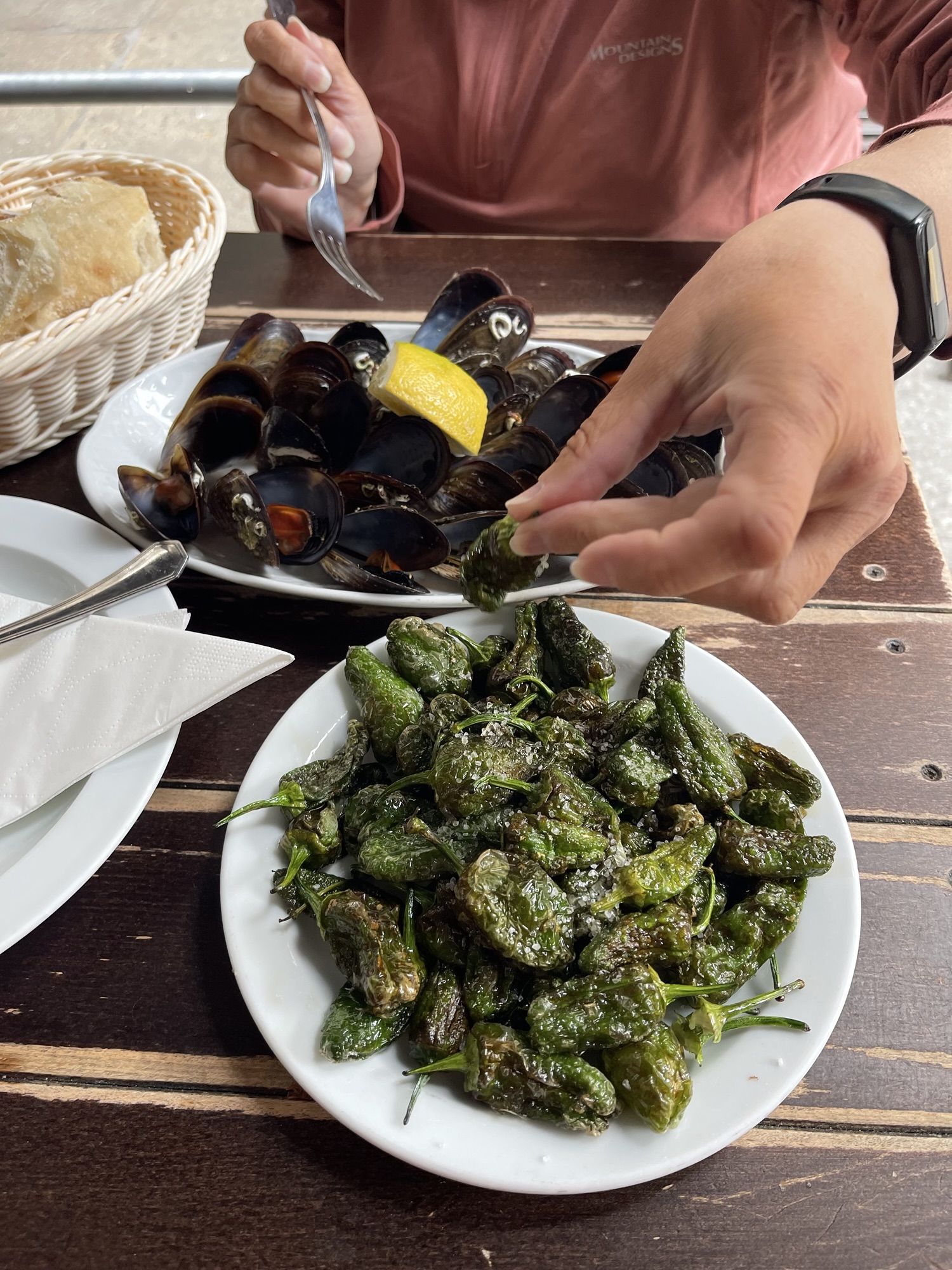
Restaurants and bar counters become as much a part of the Camino Francés as yellow arrows and scallop shells. The food you eat, and how you eat it, is a big piece of the cultural experience between Saint-Jean-Pied-de-Port and Santiago.

Menú del Peregrino, Menú del Día, And When Tapas Take Over
On much of the Francés, your main “sit-down meal” rhythm is built around two phrases: menú del peregrino (pilgrim menu) and menú del día (menu of the day). Both are usually a fixed-price, three-course meal with bread, wine or water, and coffee or dessert, often in the 10–15€ range depending on the town.
In the smaller villages, the pilgrim menu is often the default evening option and can be surprisingly good: lentil stews, simple grilled meats, tortilla, and flan. As you move into the bigger towns and cities—Pamplona, Logroño, Burgos, León—something shifts. The focus at night moves away from set menus and towards tapas or pinchos culture: standing at the bar, ordering a drink, and grazing on small plates as you move from one place to the next.

Understanding Tapas, Pinchos, And How To Order
In northern Spain, especially Navarra and La Rioja, you will hear pinchos/pintxos at least as often as tapas. The difference is mostly local terminology and presentation rather than strict rules: tapas tend to be small plates, sometimes free with a drink, while pinchos are often bite-size creations on bread, lined up on the bar with toothpicks.
A simple way to order if you feel overwhelmed at the counter:
- Start with your drink:
- “Una copa de vino tinto / blanco, por favor” (a glass of red/white wine, please).
- “Una caña, por favor” (a small beer, please).
- Ask for recommendations:
- “¿Qué pinchos recomienda?” (Which pinchos do you recommend?).
- “¿Cuál es la especialidad de la casa?” (What is the house speciality?).
- Point and order small:
- “Ese, por favor” (that one, please) while pointing.
- “Dos de esos para compartir” (two of those to share).
If you want the bar to decide for you, try: “Ponme una selección de pinchos para dos, por favor” (make me a selection of pinchos for two, please). Most bartenders are used to pilgrims and will happily improvise a little tasting plate.

When The Camino Turns Into Tapas: Pamplona, Logroño, Burgos, León
There is no exact kilometre marker where ponchos turn into tapas, but most pilgrims notice the transition once they hit the bigger northern cities. Pamplona is often the first taste; Logroño, Burgos, and León are where it really becomes a feature of the Camino day.
In these cities, your evening can easily turn into a tapas crawl: one drink and one or two pinchos in each place, then move on. After three or four bars, you will have eaten a full dinner without ever sitting down for a traditional three-course meal.

Logroño: Garlic Mushrooms And Calle Laurel
Logroño in La Rioja is the heart of tapas culture on the Francés, and Calle Laurel is its engine room. The street is lined with tiny bars, each specialising in one or two dishes, and you join locals in a slow, joyful shuffle from door to door.
Pilgrim-favourite spots include:
- Bar Soriano (Travesía de Laurel, 2) – The undisputed mushroom temple. They do one thing: grilled garlic mushrooms stacked on bread with a tiny prawn on top, dripping with garlicky oil and butter.
- Bar Cid (Travesía de Laurel, 1) – Famous for big oyster mushrooms (setas a la plancha) grilled with garlic, parsley, and olive oil; ideal with a glass of local Rioja.
- Pata Negra (Calle del Laurel, 18) – A great all-rounder with a broad range of pinchos and an excellent by-the-glass wine selection.
- Torrecilla (Calle del Laurel, 15) – Classic pinchos bar with an ever-changing line-up: mini burgers, Moorish skewers, foie toasts, and sirloin bites.
If you only do one thing in Logroño, make it this: drop your pack, shower, and head to Calle Laurel for garlic mushrooms at Bar Soriano, then follow your nose from bar to bar.

Burgos: Cathedral Views And Tapas Streets
In Burgos, the focus shifts to the streets around the cathedral and the old town, where bars offer both sit-down meals and classic tapas at the counter. You can easily build a small crawl around the historic centre:
- Casa Pancho – A long-standing favourite near the cathedral, known for traditional tapas and a lively, old-school atmosphere; a classic first stop after sightseeing.
- La Quinta del Monje – Praised for creative small plates and modern twists on regional dishes; ideal if you want something more inventive than the standard tortilla-and-calamares line-up.
- Cervecería Morito – Often packed and noisy in the best way, famous for generous tapas and raciones at fair prices; expect to stand at the bar and squeeze in.
Burgos is also a good place to sit down for a more restaurant-style evening if you are craving a proper table and a slower pace, especially in spots recommended by locals and Camino groups just off the main tourist streets.

León: Free Tapas With Every Drink
By the time you reach León, you hit one of the great gifts of the Francés: in many bars, every drink comes with a free tapa. The two main areas are Barrio Húmedo and Barrio Romántico, both tightly packed with bars just off the pilgrim route in the old town.
Some standout bars to look for:
- El Rebote (Plaza San Martín) – Famous for its croquettes in multiple flavours (pizza, jalapeño, cecina, morcilla, and more); order a drink and let the croquetas appear.
- La Bicha (near Plaza San Martín) – A bit infamous and very traditional, known for its intense morcilla (blood sausage) and no-nonsense atmosphere; a proper Leonese experience if you like bold flavours.
- Rincón del Gaucho – Great for garlic soup or picadillo with potatoes, especially on cold, damp days when you need something hearty with your wine.
- Camarote Madrid – Lively, bullfighting-themed décor and rotating tapas like garlic soup, salmorejo, or paella depending on the day and time.
In León, you can quite literally have “dinner by walking”: one drink and tapa in each bar across Barrio Húmedo and Barrio Romántico until you are comfortably full.
- Weekly Camino Weather 26 Jan 2026
- Camino Training – start now for April – October 2026
- Camino apps – Practical Guide to what might useful on the way.
- Food on the Camino – What to expect.
- Camino Francés – Rest Day Planning
What To Ask For At A Tapas Bar
If you are feeling unsure, here is a simple script you can adapt:
- Get your drink sorted first
- “Una copa de vino tinto de la casa, por favor” (a glass of house red).
- “Una caña, por favor” (a small beer).
- Ask for the speciality
- “¿Cuál es la especialidad de la casa?” (what is the house speciality?).
- In Logroño: “¿Tenéis champiñones?” (do you have mushrooms?) will usually earn a smile and a nod toward the grill.
- Order small, move often
- One drink + one or two pinchos in each bar, then move on; repeat three or four times.
- Learn a few useful words
- Ración: large plate for sharing.
- Media ración: half plate.
- Tapa / pincho: small portion/bite.
This way of eating works beautifully for pilgrims: you control portions, vary what you eat, and soak up the local atmosphere instead of disappearing into one restaurant for the night.

Pilgrim Menus, Albergue Dinners, And Local Specialities
Not every night will be a tapas crawl. Many evenings, especially in smaller villages, you will eat where you sleep or choose a straightforward pilgrim menu.
- Albergue communal dinners can be some of the most memorable meals of the whole Camino: big pots of pasta, salads, stews, shared wine, and the kind of conversation that only happens when a random group shares a table.
- Menú del peregrino / menú del día remain your reliable “fuel up” options: starter (salad, soup, pasta), main (meat or fish with potatoes), dessert (flan, yoghurt, ice cream), bread, and wine or water.
Along the way, keep an eye out for regional dishes that match the landscape you are walking through: peppers and lamb in Navarra and La Rioja, morcilla and roast meats in Castilla y León, and pulpo, caldo gallego, and tarta de Santiago once you cross into Galicia.

A Few Practical Tips For Hungry Pilgrims
- Spanish eating times are later: lunch is often 1:30–3:30 pm, dinner from 8:00–9:00 pm. Plan a late-afternoon snack or early tapas to bridge the gap.
- Vegetarians and vegans will find life easier in big cities like Pamplona, Logroño, Burgos, and León, where modern bars and restaurants usually offer salads, vegetable pinchos, and meat-free mains.
- If your Spanish is basic, remember that pointing, smiling, and a simple “por favor” go a long way at the bar. Staff in Camino cities are used to pilgrims and will usually meet you halfway.
Restaurants and tapas bars on the Camino Francés are more than places to refuel. They are where you stand shoulder to shoulder with locals, learn the rhythm of Spanish evenings, and discover that garlic mushrooms in Logroño or a noisy bar in León can become as much a part of your Camino story as any church or mountain pass.

Leave a Reply